Yeast Infections and Antibiotics in Dogs: When Are Antibiotics Appropriate?

If your dog has itchy, greasy or irritated skin, you may wonder whether yeast infections and antibiotics are connected and whether antibiotics are the right treatment. Antibiotics do not treat the yeast itself. They may be prescribed when a dog has a confirmed or suspected bacterial infection alongside yeast overgrowth, but yeast dermatitis is managed with appropriate antifungal treatment and by addressing the underlying cause. If your dog has persistent itching, redness, greasy skin, odour, hair loss or recurrent ear problems, a vet should assess the cause before treatment is chosen. The relationship between yeast infections and antibiotics is important to understand.
What Is a Yeast Infection in Dogs?
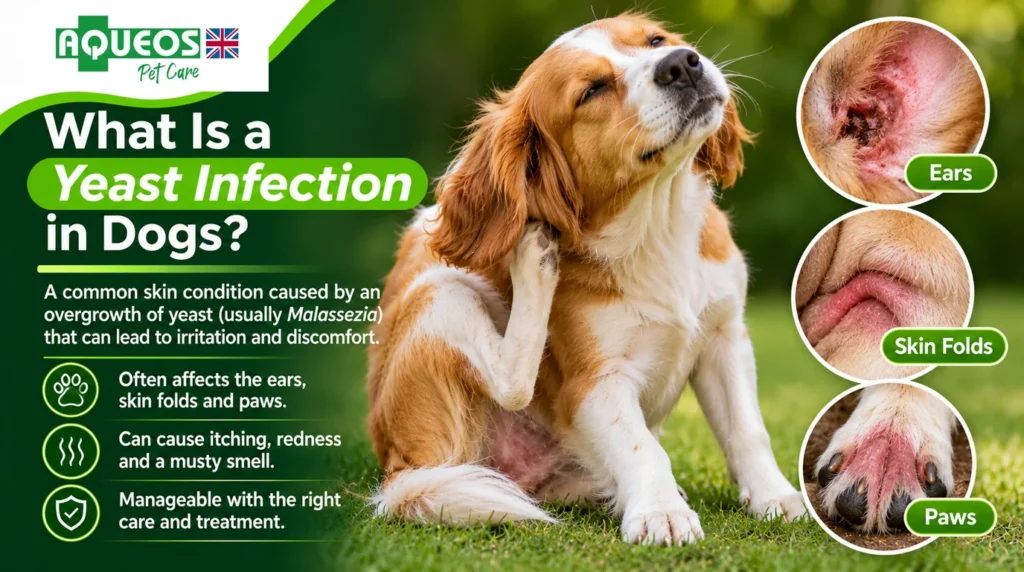
Understanding the relationship between yeast infections and antibiotics is essential for proper treatment. A canine yeast infection commonly refers to yeast dermatitis, often involving Malassezia pachydermatis. Malassezia can normally live on a dog’s skin without causing a problem, but an overgrowth can contribute to inflammation and discomfort.
Common signs can include itching, redness, a musty or sour odour, greasy skin, scaling, thickened or darker skin and recurrent ear problems. These signs are not unique to yeast, so they should not be used on their own to diagnose an infection. For the wider causes of itchy skin and when veterinary assessment is needed, see our dog itchy skin shampoo guide.
Do Yeast Infections and Antibiotics Go Together in Dogs?
When considering yeast infections and antibiotics, it is crucial to remember that antibiotics target bacteria, not yeast. No. Antibiotics are medicines used against bacteria, not fungi such as yeast. Giving an antibiotic does not treat the yeast overgrowth itself. Antibiotics may have a role when a dog has a secondary bacterial skin infection at the same time. PDSA explains that antibiotics may be needed for bacterial infections, while yeast-related skin infections require appropriate anti-yeast treatment.
When Might Antibiotics Be Used for a Dog With Yeast-Related Skin Problems?
A dog can have yeast and bacterial overgrowth at the same time. In that situation, a vet may need to address both problems. The decision to use antibiotics depends on the clinical findings and evidence of bacterial infection. Veterinary guidance emphasises confirming pyoderma where possible and using topical treatment appropriately, with systemic antibiotics reserved for cases where they are actually indicated. Do not use leftover antibiotics, human antibiotics or another dog’s prescription. The correct medicine and treatment plan depend on the diagnosis. Understanding yeast infections and antibiotics can help ensure that your dog receives the best care possible.
How Is a Yeast Infection Diagnosed?
A vet may examine the skin and take a sample for cytology to look for yeast and bacteria. The dog’s history, appearance and the location of the problem also help determine what may be causing the skin changes. Identifying yeast infections and antibiotics is an important part of managing your dog’s health.
This matters because similar signs can be caused by allergies, parasites, bacterial infections, irritation or other skin disease. If the underlying trigger is not addressed, yeast problems can recur even after the initial infection has improved.
What Are the Common Signs of Yeast Dermatitis in Dogs?
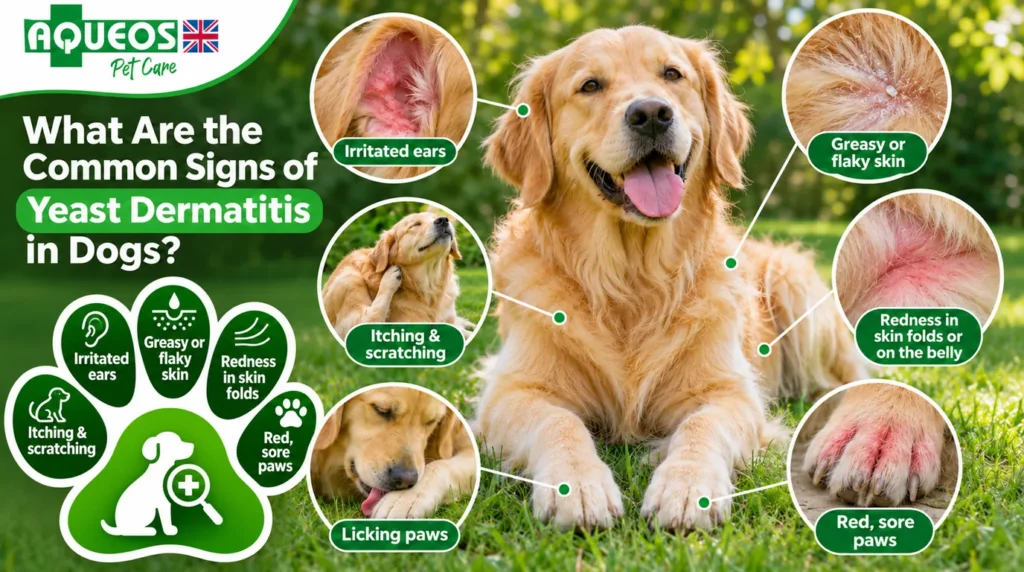
Signs vary between dogs, but common features can include:
- Itching, scratching, licking or rubbing
- Red or inflamed skin
- Greasy or oily skin
- A musty or sour odour
- Scaling or flaky skin
- Hair loss or changes in coat condition
- Thickened or darker skin in longer-standing cases
- Recurrent ear problems
These signs can overlap with allergies, bacterial infections, parasites and other dermatological conditions. A strong odour or repeated skin problem should not be treated as proof of yeast without appropriate assessment.
Why Do Dogs Keep Getting Yeast Infections?
Recurrent issues related to yeast infections and antibiotics should prompt a thorough investigation. Recurrent yeast problems often need more investigation than another round of shampoo. Underlying allergies are common contributors, and other skin conditions can also make yeast overgrowth more likely. A dog with repeated itching, ear infections, greasy skin or odour may need a veterinary review to identify and manage the underlying trigger. Treating only the visible skin problem may not prevent recurrence. Aqueos also has guidance for groomers on grooming dogs with skin allergies, including recognising signs that should be referred to a vet.
Can Shampoo Help With Yeast-Related Skin Problems?
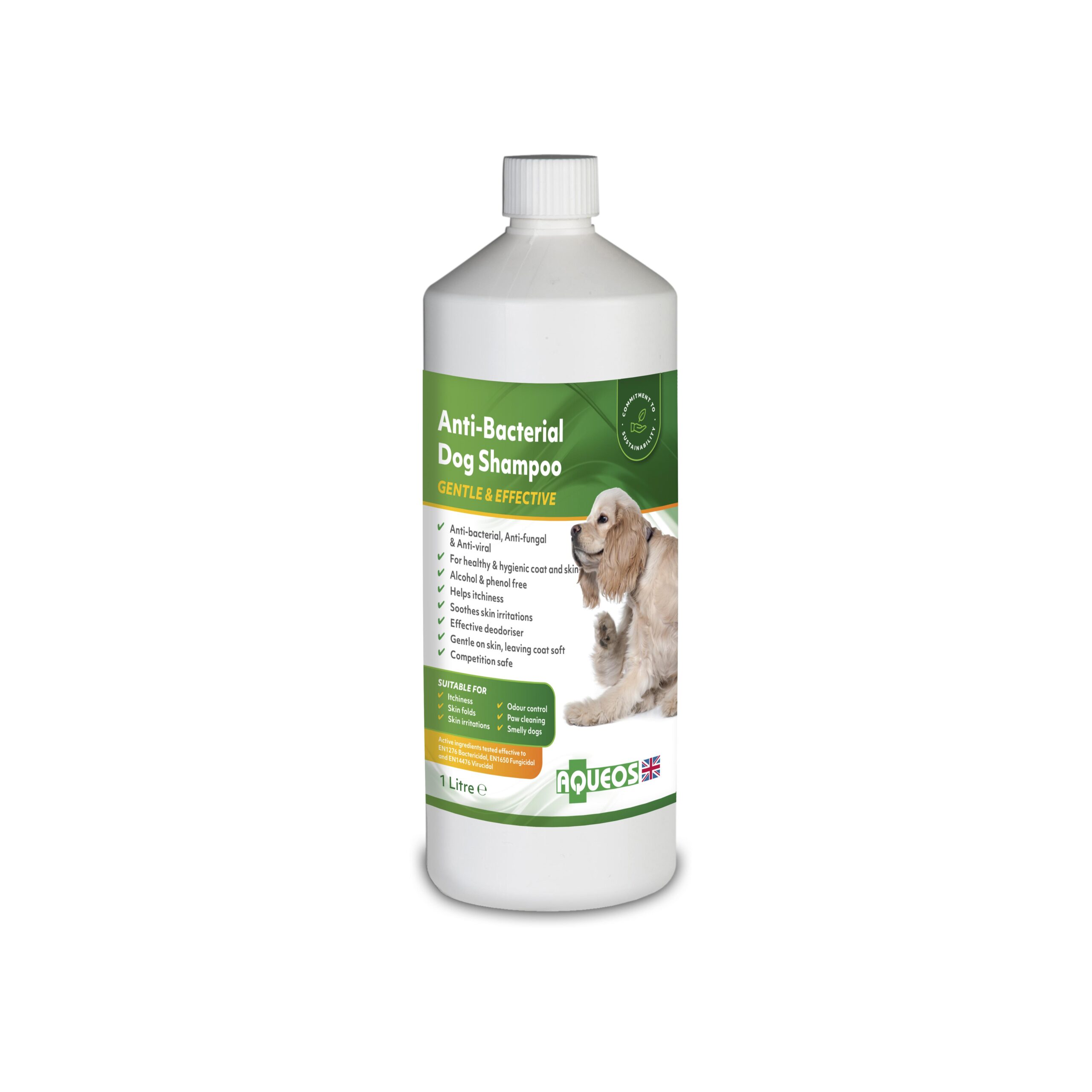
Topical treatment is an important part of managing many canine skin conditions, and veterinary guidance recognises topical therapy as a key part of managing bacterial and yeast overgrowth. Aqueos offers an anti-bacterial, anti-viral, anti-fungal and anti-itch dog shampoo. Its product information states that it is tested to BS EN14476:2013 + A2:2019 for virucidal activity, EN1276 for bacterial activity and EN1650 for fungicidal activity.
The product is intended for canine hygiene and skin care, but it should not be presented as a replacement for veterinary diagnosis or prescription treatment. See the Aqueos Anti-Bacterial/Anti-Itch Dog Shampoo for the product specifications and usage information. If a vet has recommended a medicated shampoo, follow the veterinary and product instructions, including the required contact time and frequency.
What Should You Do If You Think Your Dog Has a Yeast Infection?
Start by arranging appropriate veterinary advice if the problem is persistent, recurrent or more than mild irritation. Do not try to diagnose yeast solely from smell or appearance. Before the appointment, note when the signs started, where they occur, whether your dog is scratching or licking, whether there is ear involvement, whether the problem keeps returning and what products or medicines have already been used. While waiting for advice, keep the coat and affected areas clean and dry where appropriate, and avoid applying human medicines or leftover veterinary medication unless your vet has specifically instructed you to do so.
When Should a Dog With Skin Symptoms See a Vet?
A veterinary assessment is particularly important when itching is persistent, the skin is broken or painful, there is discharge, significant redness or swelling, hair loss, strong odour, repeated ear problems or the condition keeps returning. Aqueos’ existing itchy-skin guidance also recommends veterinary assessment when scratching is persistent or accompanied by broken skin, redness, swelling, discharge, hair loss or strong odour. For skin-fold problems specifically, see our guide to yeasty wrinkles in dogs.
Antibiotics, Yeast and Responsible Treatment
The key distinction is simple: antibiotics target bacteria, while yeast requires antifungal management. A dog can have both types of overgrowth at the same time, but that does not mean antibiotics are automatically appropriate. Responsible antimicrobial use matters because unnecessary antibiotic exposure contributes to antimicrobial resistance.
UK veterinary guidance recommends using antibacterials carefully and only when they are needed. For that reason, a dog with suspected yeast dermatitis should not be given leftover antibiotics or medication prescribed for another animal. Veterinary assessment is the appropriate route when infection is suspected.
FAQs for Yeast Infections and Antibiotics In Dogs
Do antibiotics treat yeast infections in dogs?
No. Antibiotics target bacteria, not fungi such as yeast. They may be prescribed when a bacterial infection is also present, but they do not treat the yeast overgrowth itself. It is important to clarify the role of yeast infections and antibiotics in treatment protocols.
Can a dog have a yeast and bacterial infection at the same time?
Yes. Yeast and bacterial overgrowth can occur together, particularly in dogs with underlying skin disease. A vet can assess whether both need treatment.
What are common signs of a yeast infection in dogs?
Recognising symptoms related to yeast infections and antibiotics can aid in timely veterinary care. Possible signs include itching, redness, greasy skin, a musty or sour odour, scaling, thickened or darker skin and recurrent ear problems. These signs can also occur with other skin conditions.
Can yeast infections in dogs be treated with shampoo?
Topical treatment can be an important part of managing yeast-related skin disease. The appropriate product and treatment schedule depend on the dog’s condition and veterinary advice. Effective management of yeast infections and antibiotics often involves veterinary support.
Can I give my dog leftover antibiotics for a skin infection?
No. Do not give leftover antibiotics or medication prescribed for another animal. Antibiotics are prescription-only veterinary medicines in the UK and should be used under veterinary direction. The connection between yeast infections and antibiotics is vital in understanding how to treat your dog.
Why does my dog’s yeast infection keep coming back?
Recurrent yeast overgrowth can be associated with underlying problems such as allergies or other skin disease. Treating the underlying cause is important for reducing recurrence. Identifying the interplay of yeast infections and antibiotics can significantly impact treatment outcomes.
Does an itchy or smelly dog always have a yeast infection?
No. Itching and odour can have several causes, including allergies, bacterial infections, parasites and other skin conditions. A vet should assess persistent or recurrent symptoms. A thorough understanding of yeast infections and antibiotics is essential for effective care.
When should I take my dog to the vet for a skin problem?
Seek veterinary advice when symptoms are persistent, severe, recurrent or associated with broken skin, pain, discharge, significant redness or swelling, hair loss, strong odour or repeated ear problems.