Equine Thrush Treatment: Signs, Causes and What Horse Owners Should Know

If your horse has a foul-smelling hoof, black discharge or a soft, deteriorating frog, thrush may be one possible cause. Effective equine thrush treatment is not simply about applying a product: the affected hoof needs appropriate cleaning and assessment, while hoof balance, management and the stable environment may also need attention. Regular equine thrush treatment is crucial to maintaining hoof health.
Thrush is a common hoof problem involving the frog and its grooves. The signs can be recognisable, but persistent pain, lameness, bleeding or unusual changes should be assessed by a veterinarian or experienced farrier rather than treated by trial and error. Implementing proper equine thrush treatment can significantly improve your horse’s comfort and mobility.
What Is Thrush in Horses?
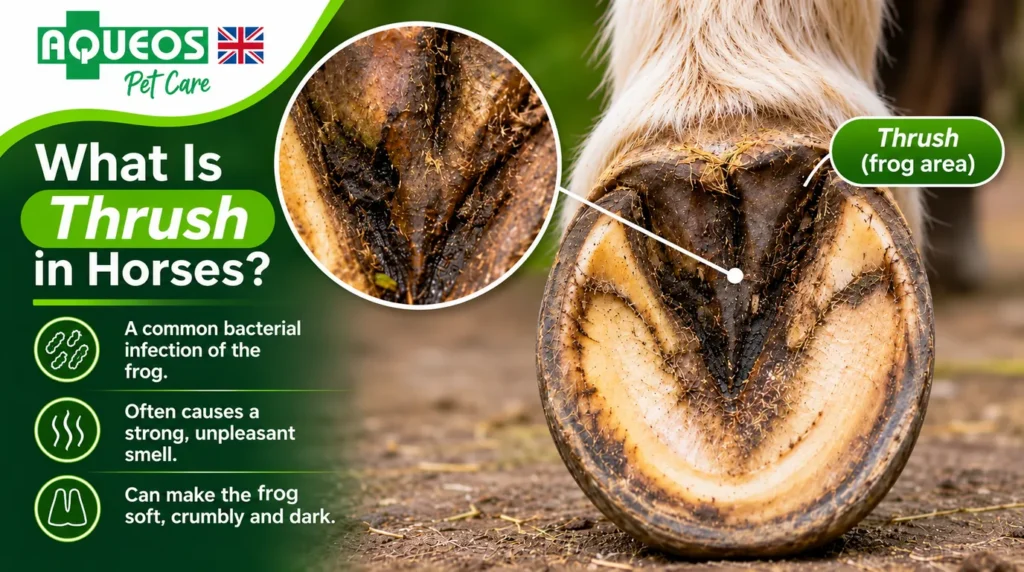
Thrush is a degenerative condition of the frog of the horse’s hoof. Anaerobic bacteria are thought to play an important role, and the condition commonly affects the central and collateral sulci, where moisture, debris and damaged tissue can create an environment in which microorganisms thrive. Understanding the importance of equine thrush treatment helps in early detection and prevents severe complications.
Aqueos’ existing guide to smelly horse hooves explains that thrush can produce a characteristic foul smell and dark discharge from the frog grooves. It also explains why daily hoof care and stable hygiene are important parts of prevention. For the wider signs and causes of abnormal hoof odour, see our smelly horse hooves guide.
What Are the Signs and Symptoms of Thrush in Horses?
Common signs of thrush can include:
- A strong, unpleasant hoof odour
- Black, grey or dark discharge from the frog grooves
- Soft, damaged or deteriorating frog tissue
- Sensitivity when the frog is cleaned
- A change in the normal appearance of the central or collateral sulci
- Lameness when deeper tissues are affected
These signs can overlap with other hoof problems. A foul smell is not enough to establish the diagnosis by itself, particularly if the horse is painful or lame.
What Causes Thrush in Horses?
Thrush is often associated with a combination of hoof, management and environmental factors rather than one single cause.
- Persistent moisture or soiled bedding
- Infrequent hoof cleaning
- Poor access to clean, dry standing areas
- Deep or narrow frog grooves that retain debris
- Hoof conformation or balance issues
- Irregular farrier care
- Reduced exercise or movement
- Existing hoof disease or damaged frog tissue
Importantly, thrush can occur even when a horse has good general care. The MSD Veterinary Manual’s guidance on thrush in horses notes that hoof conformation, trimming, exercise and environmental conditions can all influence rish, so simply blaming dirty stables can oversimplify the problem.
What Does Equine Thrush Treatment Involve?
The right equine thrush treatment depends on the depth and severity of the problem. A common principle is to remove loose or unhealthy horn and debris so the affected area can be properly cleaned and reached by an appropriate topical treatment. A consistent equine thrush treatment regimen can prevent the recurrence of this condition.
Where diseased tissue needs trimming or debridement, this should be carried out appropriately by a farrier or veterinarian. Aggressive treatment can damage healthy frog tissue, so stronger is not automatically better. Topical products should be selected and used according to their instructions and the condition being treated. If the frog is raw, bleeding or very painful, obtain veterinary or farrier advice rather than repeatedly applying strong chemicals.
How Should You Clean a Horse’s Hoof During Thrush Treatment?
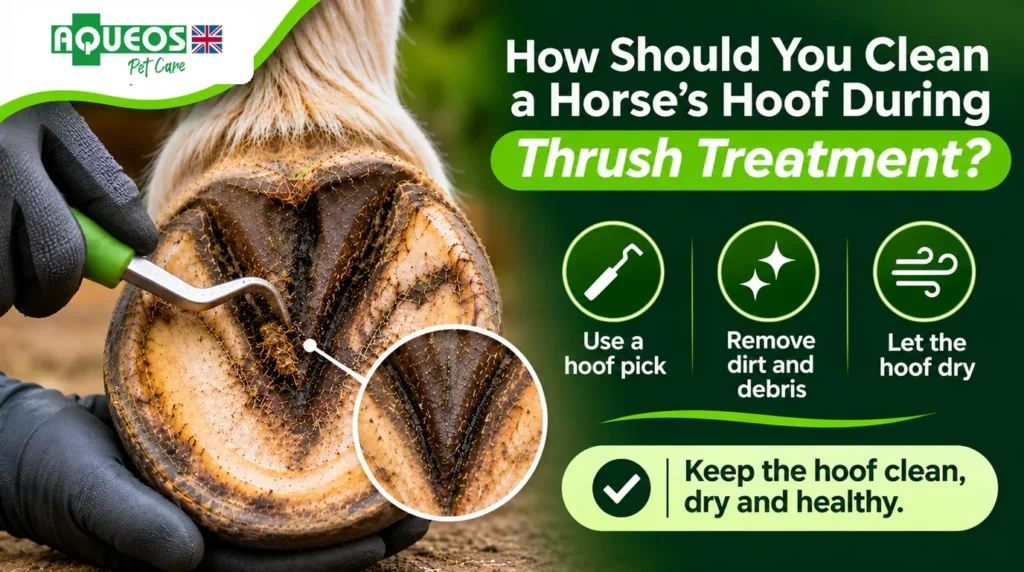
Cleaning is an important part of managing thrush because mud, manure and other debris can remain in the frog grooves and prevent treatment from reaching the affected tissue.
- Pick out the hoof carefully and regularly.
- Remove obvious debris from the sole, frog and grooves.
- Allow the hoof to dry where appropriate.
- Avoid repeatedly damaging healthy frog tissue during cleaning.
- Monitor the hoof for changes rather than relying only on smell.
Does Stable Hygiene Help Prevent Thrush in Horses?
Incorporating equine thrush treatment into your routine can save you time and stress in the long run. Yes. Stable hygiene can reduce the environmental conditions that contribute to hoof problems, although disinfecting a stable is not a substitute for hoof care or treatment of an established case.
Keep bedding and standing areas as clean and dry as practical, remove wet or soiled material regularly, and maintain sensible yard hygiene. Aqueos provides equine disinfectants for stables, yards, transport areas and equipment. For broader yard hygiene, see Aqueos Stable and Multi-Use Disinfectant.
Why Is Treating the Underlying Cause of Equine Thrush Important?
You may see temporary improvement if the affected area is cleaned and treated, but recurrent thrush should prompt a review of the horse’s hoof care and environment. If thrush keeps returning, consider whether the horse has a hoof conformation issue, uneven hoof balance, inadequate trimming, persistent moisture, poor drainage or another problem that needs professional attention.
When Should a Vet or Farrier Assess the Hoof?
Professional assessment is particularly important if:
- The horse is lame or reluctant to bear weight
- The frog is painful to touch
- There is bleeding or ulcerated tissue
- The discharge is persistent or unusually extensive
A comprehensive understanding of equine thrush treatment can empower horse owners to act quickly.
- The hoof changes rapidly
- Treatment is not improving the problem
- Thrush repeatedly returns despite sensible management
Pain or lameness can indicate that disease has progressed beyond a superficial problem. The MSD Veterinary Manual advises professional assessment where deeper tissues may be involved or the condition is not responding to appropriate management.
Common Thrush Treatment Mistakes to Avoid
- Treating smell alone without examining the hoof.
- Using harsh or caustic products repeatedly because they seem stronger.
- Ignoring hoof balance, trimming or conformation.
- Leaving wet or heavily soiled bedding in the stable for long periods.
- Failing to involve a farrier or vet when the horse becomes painful.
- Assuming every foul-smelling hoof problem is thrush.
How Can Everyday Hoof Care Help Prevent Equine Thrush?
Good equine thrush treatment is part of a wider hoof-care routine. Regular picking out, sensible stable management, appropriate farrier care and early attention to changes in the frog can all help reduce the risk of persistent problems.
Aqueos supports the hygiene side of equine care with stable and yard disinfectants, but these products should be used as part of a wider management routine and not presented as a replacement for veterinary or farrier treatment.
FAQs for Equine Thrush Treatment
What is the best equine thrush treatment?
Many horse owners have questions regarding equine thrush treatment options available. There is no single product that is best for every case. Treatment should address the affected frog, remove unhealthy tissue where appropriate, keep the hoof clean and dry, and address underlying management or hoof-care factors. A vet or farrier should assess painful or persistent cases.
What does thrush look like in a horse’s hoof?
Typical signs include foul odour, dark discharge in the central or collateral sulci and soft or deteriorating frog tissue. Lameness can occur when the condition extends into deeper tissues.
Can thrush make a horse lame?
Yes. Mild thrush may not cause obvious lameness, but pain and lameness can occur when deeper tissues are affected. A lame horse should be assessed by a vet or farrier.
Does ‘thrush’ mean my horse’s stable is dirty?
Not necessarily. Stable hygiene can influence risk, but thrush can also be associated with hoof conformation, trimming, exercise and other factors.
How often should I pick out my horse’s feet?
Establishing a routine for equine thrush treatment is essential for maintaining hoof health. Regular hoof picking is an important part of everyday care. The exact routine depends on the horse, environment and workload, but feet should be checked frequently enough to identify debris, changes or injuries early.
Can I use disinfectant to treat thrush?
Stable disinfectant is intended for environmental hygiene, not as a substitute for treating the horse’s hoof. Use products only for their intended purpose and follow the label.
Why does my horse keep getting thrush?
Recurring thrush may be linked to hoof conformation, trimming or balance, persistent moisture, stable conditions or other factors. A farrier or vet can help identify the underlying issue.
When should I call a vet about thrush?
Always consult a vet for advice on effective equine thrush treatment to ensure the best outcome for your horse. Seek veterinary advice if the horse is lame, the frog is very painful, there is bleeding or ulceration, the condition is severe, or the problem is not improving.