Skin Rashes That Look Like Ringworms in Horses: What Else Could It Be?

If you notice a circular, crusty, scaly or hairless patch on your horse, it is understandable to wonder whether it is ringworm. But skin rashes that look like ringworms can have several causes, and appearance alone is not enough to confirm the diagnosis.
Ringworm is a contagious fungal infection, but horses can also develop bacterial, parasitic, allergic and inflammatory skin problems that produce overlapping signs. If the lesion is spreading, painful, recurrent or affecting more than one horse, veterinary assessment is important.
What Does Ringworm Look Like in Horses?
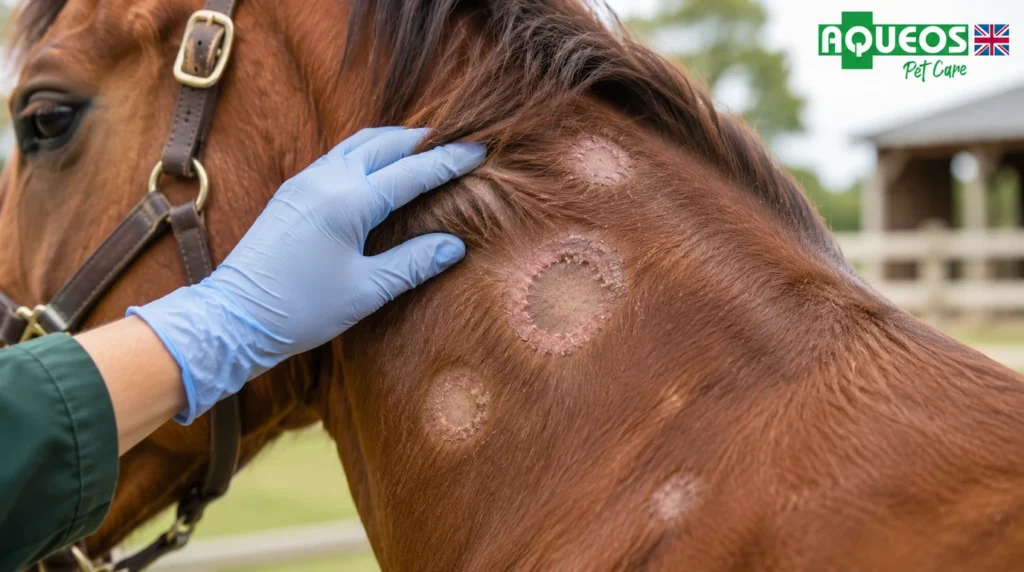
Ringworm, also called dermatophytosis, is a superficial fungal infection affecting the skin and hair. In horses it commonly produces circular or irregular areas of hair loss, scaling and crusting, although the appearance can vary.
Aqueos’ existing ringworm guide explains that lesions may begin as raised or altered hair and progress to circular areas of hair loss with redness, scaling, crusting or discharge. It also explains why ringworm can spread through direct contact and contaminated equipment.
For the full background on confirmed equine ringworm, see Aqueos’ guide to ringworm in horses.
Why Can Other Skin Conditions Look Like Ringworm?
Many equine skin diseases share broad signs such as hair loss, crusting, redness, scaling or areas of irritated skin. A veterinary diagnosis may require the horse’s history, physical examination and, where appropriate, skin or hair samples.
The MSD Veterinary Manual notes that several conditions can be considered when diagnosing equine dermatophytosis, including dermatophilosis and bacterial folliculitis. Other equine skin diseases can also produce circular, crusty or hairless lesions.
Skin Rashes That Look Like Ringworms: Common Possibilities
The following conditions can sometimes produce signs that overlap with suspected ringworm. This list is not a diagnosis; it is a reason to avoid assuming that every circular or crusty lesion is fungal.
Dermatophilosis: Can cause crusting and hair loss, particularly in horses exposed to wet conditions.
Bacterial skin infection: May cause inflamed, crusted or oozing areas and can occur as a primary problem or alongside another skin condition.
Allergic or insect-related dermatitis: Can produce itching, hair loss, crusting or repeated skin irritation, especially where biting insects are involved.
Mites and other parasites: Can cause scaling, crusting, hair loss and irritation. The distribution and level of itching can provide useful clues.
Trauma or rubbing: Girth, tack, rugs, fencing or grooming can irritate skin and create lesions that may initially look suspicious.
Other inflammatory skin diseases: Some less common conditions can produce nodules, crusts, hair loss or circular-looking lesions and may require diagnostic testing.
Can You Tell Ringworm From Appearance Alone?
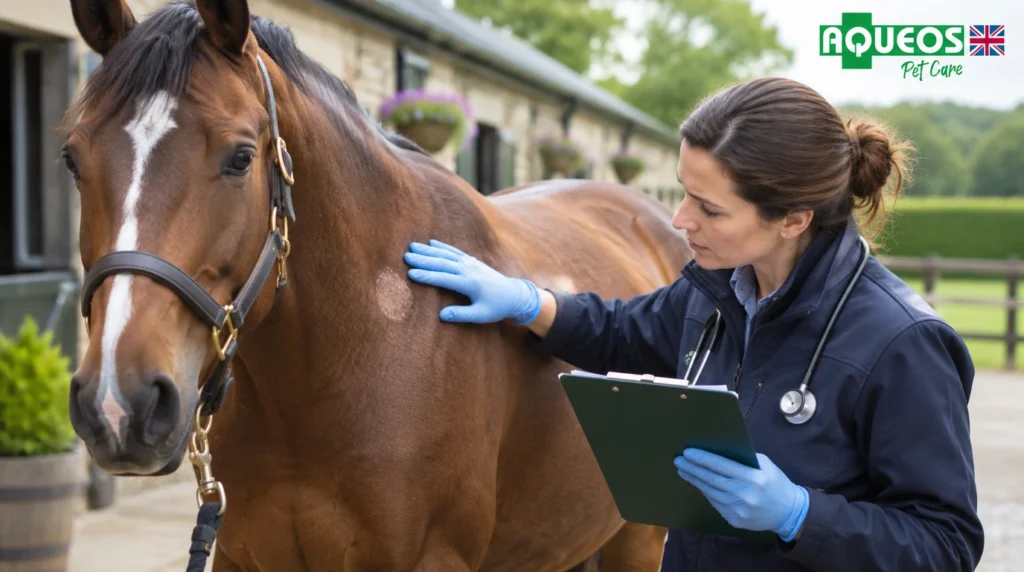
Not reliably. A typical appearance can increase suspicion, but confirmation may involve examination of hairs or skin scales, fungal culture or other diagnostic methods depending on the case.
If ringworm is suspected, treat the possibility seriously because it can spread between horses and can also affect people. Until you have veterinary advice, sensible hygiene and avoiding unnecessary sharing of grooming equipment are practical precautions.
What Should You Do if You See a Suspicious Rash?
- Take a clear photograph so you can monitor changes and show your vet.
- Note when the lesion was first noticed and whether it is spreading.
- Check whether other horses have developed similar lesions.
- Think about recent changes such as new horses, competitions, shared grooming equipment, new rugs or increased insect exposure.
- Avoid sharing grooming tools, tack or cloths between affected and unaffected horses.
- Ask your vet for advice if ringworm is suspected or the skin problem is persistent.
Why Grooming Equipment Hygiene Matters
Ringworm can spread through contaminated grooming tools and other fomites. This is why brushes, rugs, tack and other shared equipment should be included in an outbreak-control plan when ringworm is suspected or confirmed.
Aqueos provides equine hygiene and disinfectant products for stables, yards and equipment. Use any disinfectant according to its label and intended application rather than assuming that a general cleaner will control every pathogen.
For stable and equipment hygiene, see Aqueos’ equine disinfectants.
Can a Horse Have Ringworm Without the Classic Ring Shape?
Yes. Ringworm does not always form a perfect ring. Lesions can become irregular, merge together or change appearance as the infection progresses. This is one reason the shape of a lesion should not be used as the only diagnostic test.
When Should a Vet Assess a Horse’s Skin Rash?
- The rash is spreading or appearing in multiple areas.
- Several horses develop similar lesions.
- The horse is painful, very itchy or showing signs of general illness.
- There is significant discharge, swelling, ulceration or bleeding.
- The lesion does not improve or keeps returning.
- Ringworm is suspected, and the horse is in contact with other horses or people.
The MSD Veterinary Manual advises that accurate diagnosis of equine skin disease may require a detailed history, examination and appropriate diagnostic tests because many skin conditions look alike.
How to Reduce the Risk of Skin Disease Spreading
- Keep grooming tools clean and avoid unnecessary sharing.
- Clean and disinfect appropriate surfaces and equipment according to product instructions.
- Quarantine new horses according to your veterinary or yard biosecurity plan.
- Monitor new or returning horses for changes in skin and coat.
- Do not assume a skin problem is harmless because the horse is otherwise well.
Skin Rashes That Look Like Ringworms: The Practical Takeaway
A circular or crusty skin lesion can be a clue, but it is not a diagnosis. Ringworm is one possibility among several equine skin conditions, so persistent, spreading or suspicious lesions should be assessed appropriately.
Good hygiene helps reduce the risk of spread, but it should sit alongside veterinary diagnosis and treatment when a contagious or persistent skin condition is suspected.
FAQs for Skin Rashes Look Like Ringworms
What skin rashes can look like ringworm in horses?
Dermatophilosis, bacterial skin infections, insect-related dermatitis, mites, trauma and other inflammatory skin conditions can produce signs that overlap with ringworm. A vet may need to examine the horse and take samples.
Does ringworm always look like a ring?
No. Ringworm can produce irregular patches of hair loss, scaling and crusting, and lesions may merge as the condition develops.
Is ringworm in horses contagious?
Yes. Equine ringworm can spread between horses and can also be transmitted to people, so suspected cases should be managed with appropriate hygiene and veterinary advice.
Can you diagnose ringworm from a photo?
A photograph can help document the lesion, but it cannot reliably confirm ringworm. Veterinary examination and, where appropriate, diagnostic testing may be needed.
What should I do if my horse develops a circular bald patch?
Keep the area under observation, avoid unnecessary sharing of grooming equipment and contact your vet if ringworm is suspected or the lesion is spreading, painful or persistent.
Can allergies look like ringworm?
Yes. Allergic and insect-related skin disease can cause hair loss, crusting and irritation that may overlap with suspected ringworm.
How can I reduce the spread of suspected ringworm?
Limit sharing of grooming equipment and other potentially contaminated items, follow veterinary advice and use appropriate hygiene measures for the horse and its environment.
When should a horse with a skin rash see a vet?
Seek veterinary advice when a rash is spreading, recurrent, painful, associated with discharge or affecting multiple horses, or when ringworm is suspected.