GET 20% OFF WITH COUPON CODE EARLYBF20

Abscess in a Dog’s Foot: Signs, Causes and When to See a Vet

An abscess in a dog’s foot is a painful pocket of infection that can develop beneath the skin, around a wound or between the toes. A swollen, hot, tender paw, discharge, persistent licking or reluctance to put weight on the foot should not be ignored.
Because paw problems can have several causes, you should not assume every swollen or painful paw is an abscess. A vet can assess the foot, look for a foreign body or wound and decide what treatment is appropriate.
What Does an Abscess in a Dog’s Foot Look Like?
An abscess is a collection of pus caused by an infection. On a dog’s foot, it can develop after a puncture, bite, foreign body, small wound or another route that allows bacteria to enter the tissue. PDSA describes abscesses as painful collections of pus beneath the skin and advises contacting a vet if you suspect your dog has one. The location of a paw abscess can make walking, licking and weight-bearing particularly uncomfortable.
What Does a Dog Foot Abscess Look Like?
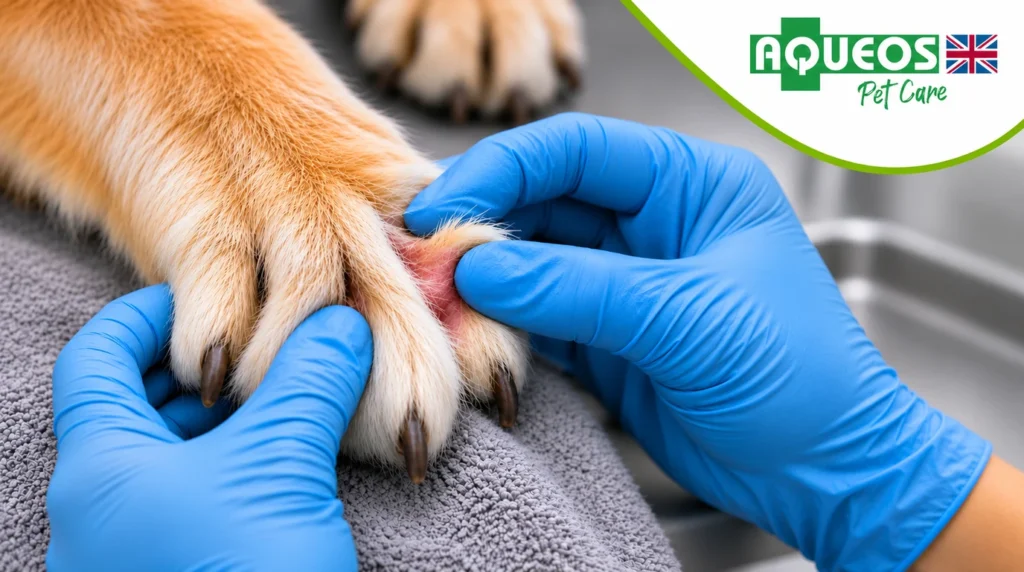
Possible signs include:
- Swelling in the paw or between the toes
- Heat or tenderness
- Red or inflamed skin
- A visible puncture, scab or wound
- Pus or other discharge
- Persistent licking or chewing of the foot
- A limp or reluctance to put weight on the paw
- A sudden change in behaviour because the foot is painful
- A strong or unpleasant smell from the affected area
A dog may also hide pain, so a change in walking, grooming behaviour or willingness to use the foot can be significant even when the swelling is small.
What Causes an Abscess in a Dog’s Foot?
- Puncture wounds: A small hole can close over while bacteria remain inside.
- Foreign bodies: Grass seeds, splinters or other material can become embedded in the paw.
- Bites or scratches: Animal bites can introduce bacteria beneath the skin.
- Broken nails: Damage around a nail can allow infection to develop.
- Cuts and grazes: Open skin can become infected if bacteria enter the wound.
- Interdigital irritation: Inflammation between the toes can create opportunities for infection or secondary problems.
The cause matters because an abscess may not resolve properly if a foreign body remains or if the underlying wound is not addressed.
How Can You Check Your Dog’s Paw Safely?
If your dog is calm and allows handling, you can look at the paw without squeezing the swelling or digging into the wound.
- Check the top and underside of the paw.
- Look between the toes and around the nails.
- Look for obvious cuts, punctures, swelling, discharge or a foreign object.
- Compare the affected paw with the opposite paw.
- Stop if your dog becomes painful, frightened or defensive.
Pain can make even friendly dogs react differently. Do not force an examination if there is a risk of a bite.
Should You Squeeze a Dog Paw Abscess?
No. Do not squeeze, puncture or attempt to drain a suspected abscess yourself. Manipulating an infected area can cause pain, spread contamination or push material deeper into tissue.
If a foreign object is embedded, do not dig into the paw to remove it. PDSA advises veterinary assessment for wounds containing foreign material and for wounds that are deep, painful or otherwise concerning.
What Can You Do While Waiting for Veterinary Advice?
If the paw has a minor open wound and your dog is otherwise comfortable, basic first-aid principles may include keeping the area clean and preventing further licking or chewing. However, a suspected abscess in a dog’s foot needs professional assessment rather than home treatment.
- Keep your dog calm and restrict activities that make the paw more painful.
- Prevent excessive licking or chewing if you can do so safely.
- Keep the paw clean and dry where appropriate.
- Do not apply human medicines or leftover antibiotics.
- Do not use strong chemicals or household disinfectants directly on an open wound unless a vet has specifically advised it.
- Contact your vet if swelling, pain, discharge or lameness is present.
When Should a Dog With a Paw Abscess See a Vet?
Arrange veterinary assessment promptly if you notice signs of an abscess in a dog’s foot, especially when there is pain, swelling, heat, discharge or lameness.
- If the paw is very painful, your dog will not bear weight.
- There is pus, blood or significant discharge.
- The swelling is rapidly increasing.
- Your dog seems unwell, lethargic or feverish.
- There is a deep puncture or something embedded in the paw.
- The wound is not healing or keeps returning.
- Your dog has been bitten by another animal.
- You cannot safely examine the paw because your dog is in significant pain.
PDSA advises veterinary assessment for abscesses and infected wounds, while Vets Now highlights discharge, redness, bleeding and foreign objects as signs that a dog’s paws need attention. For general guidance on abscesses in dogs, see this advice from Animal Trust Vets.
How Is an Abscess in a Dog’s Foot Treated?
Treatment depends on the cause and severity. A vet may need to examine the paw, identify and remove a foreign body, clean or drain an abscess, manage pain, and decide whether additional medication is needed.
Do not assume antibiotics are always required. The appropriate treatment depends on the infection, wound and clinical findings. Never give leftover antibiotics or medication prescribed for another animal.
Can a Dog Paw Abscess Burst by Itself?
An abscess in a dog’s foot may eventually drain, but that does not mean the underlying problem has been resolved. A draining wound can still require veterinary assessment, particularly if there is a foreign body, persistent swelling, pain or recurrent discharge.
Keep the area from being licked and follow veterinary instructions for cleaning and wound care.
Dog Paw First Aid and Wound Care
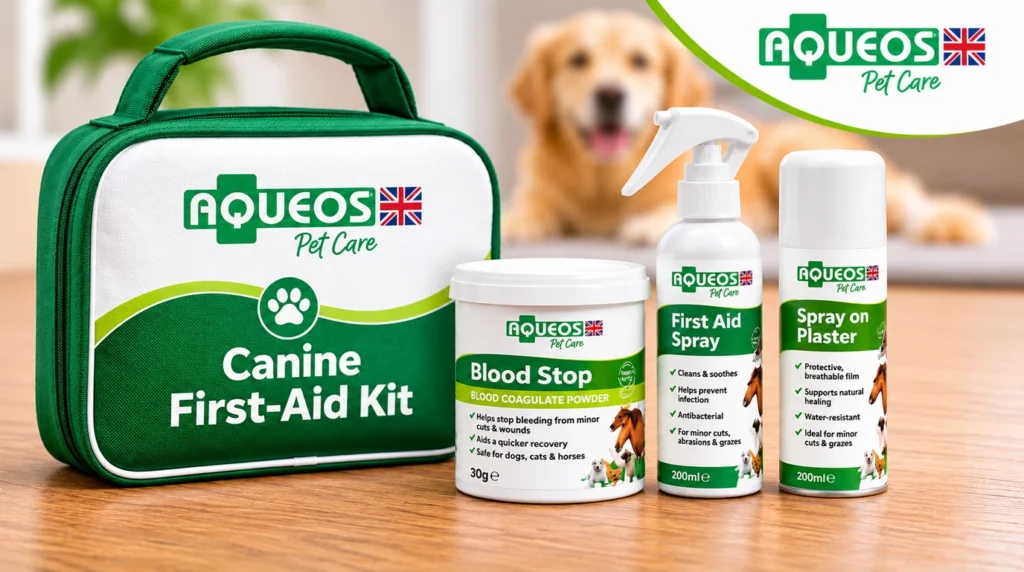
Aqueos already provides canine first-aid guidance covering wounds, bleeding, paw injuries and the importance of veterinary intervention when an injury is serious or unclear. For wider preparation and emergency guidance, see our first aid for dogs guide. Aqueos also offers canine first-aid training that covers paw injuries, bleeding, bandaging and recognising when veterinary intervention is required.
See the Canine Basic First Aid Online Course for course details.
Can Aqueos Products Be Used for Minor Wound Care?
Aqueos offers first-aid products designed for animal care, including spray-on plaster, disinfectant wipes and blood-stopping products. These products are intended for appropriate first-aid and hygiene situations and should not be presented as a substitute for veterinary diagnosis or treatment of an abscess in a dog’s foot.
For the wider first-aid range, see the Dog First Aid Bundle.
FAQs for Abscess in Dog’s Foot
What is an abscess in a dog’s foot?
It is a pocket of pus caused by infection beneath or within the tissues of the paw. It can develop after punctures, bites, foreign bodies or other wounds.
What are the signs of a dog paw abscess?
Possible signs include swelling, heat, tenderness, redness, discharge, persistent licking and reluctance to bear weight.
Should I squeeze my dog’s paw abscess?
No. Do not squeeze, puncture or attempt to drain a suspected abscess yourself. Contact your vet for appropriate assessment.
Can a grass seed cause a dog paw abscess?
Yes. A foreign body such as a grass seed can enter the paw and provide a route for infection. A vet may need to identify and remove it.
Can a dog paw abscess burst on its own?
It can drain, but a burst abscess may still need veterinary assessment, particularly if there is persistent swelling, pain, discharge or a retained foreign body.
Does every dog paw abscess need antibiotics?
Not necessarily. Treatment depends on the cause and severity. A vet should decide whether antibiotics or other medication are appropriate.
What can I do for my dog’s paw while waiting for the vet?
Keep the dog calm, prevent excessive licking, keep any minor wound clean and avoid squeezing or probing the area. Contact your vet for specific advice.
When is a swollen dog paw an emergency?
Seek urgent veterinary help if your dog has severe pain, cannot bear weight, has significant bleeding or swelling, has a deep wound or embedded object, or appears generally unwell.